Building defects
In short: Termite damage may need a structural engineer when termites have eaten into structural timber, such as bearers, joists, studs, beams or roof framing. A licensed termite management contractor finds and treats the termites. A Registered Professional Engineer of Queensland (RPEQ) assesses whether the damaged members can still carry their loads and designs the repair. Termites are particularly active in hot, wet areas such as coastal Queensland.
Key takeaways
- The Queensland Government advises not disturbing termite nests, mud tunnels or trails if you think your home has termites.
- In Queensland, a contractor needs a QBCC Termite Management licence to give advice or reports on termite management systems or infestations.
- A timber pest inspection under AS 4349.3 is visual and non-invasive, and may recommend further investigation.
- Repairs that affect a structural component, other than a minor one, fall outside the Building Regulation 2021's self-assessable repair items.
- Queensland's coastal belt is generally regarded as a high hazard area for subterranean termites, according to the state's primary industries department.
Found termite damage in a bearer, stud or roof frame? Send us photos for a quote or call 07 3155 5013.
What are the signs of termite damage in a house?
The signs of termite damage are timber that sounds hollow, blistered or bubbled paint, rippled or bulging linings and trims, and mud tunnels on walls, stumps and paths. The Queensland Government's termite guidance lists these checks:
- Hollow timber. Tap your knuckles on skirting boards, architraves, doors and window frames, and listen for a dull, hollow sound.
- Paint and linings. Look for blistered or bubbled paint, and rippled or bulging wall linings, skirtings or architraves.
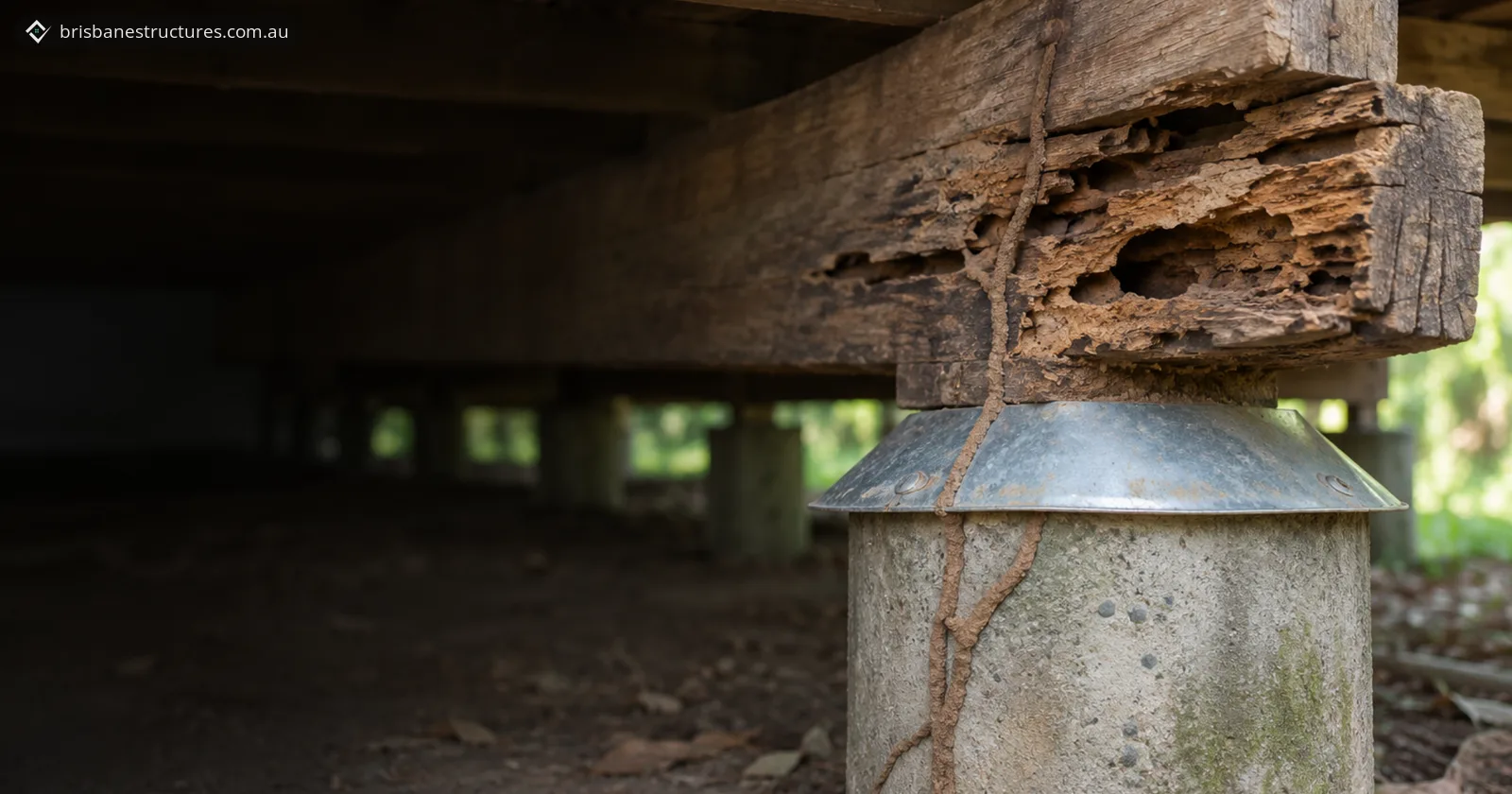
- Mud tunnels. Check for small mud tunnels against walls and paths, or trails leading up foundation posts or brick walls into the home. The Queensland Government says they are more likely in moist areas against the building and in storage areas under it.
The Queensland Building and Construction Commission (QBCC) explains why the tunnels appear. Termites build mud galleries when they are at risk of being exposed, so they can travel over piers or walls to reach the timber. They can also get inside through wall cavities, cracks in mortar or concrete slabs, and gaps next to service entry points. The QBCC says most infestations occur at the perimeter of the building.
Which parts of a house matter most when termites attack?
Termite damage matters most structurally when it reaches the members that hold the house up: the roof structure, load-bearing walls, beams and floor structure. The QBCC lists these as primary building elements, the parts the Building Code of Australia (BCA) requires to be protected against termites. Queensland extends the list to door jambs, window frames and reveals, architraves and skirting.
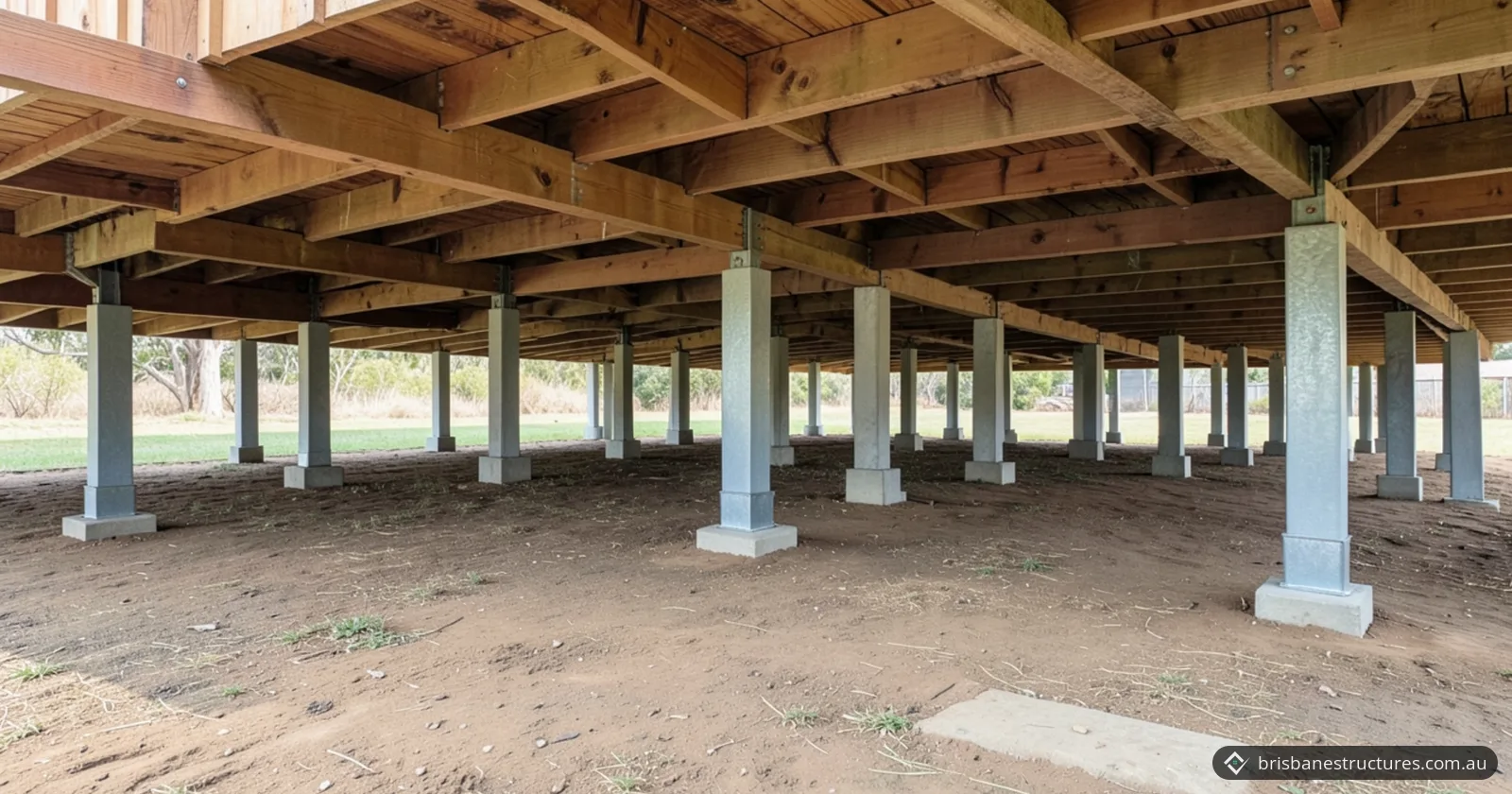
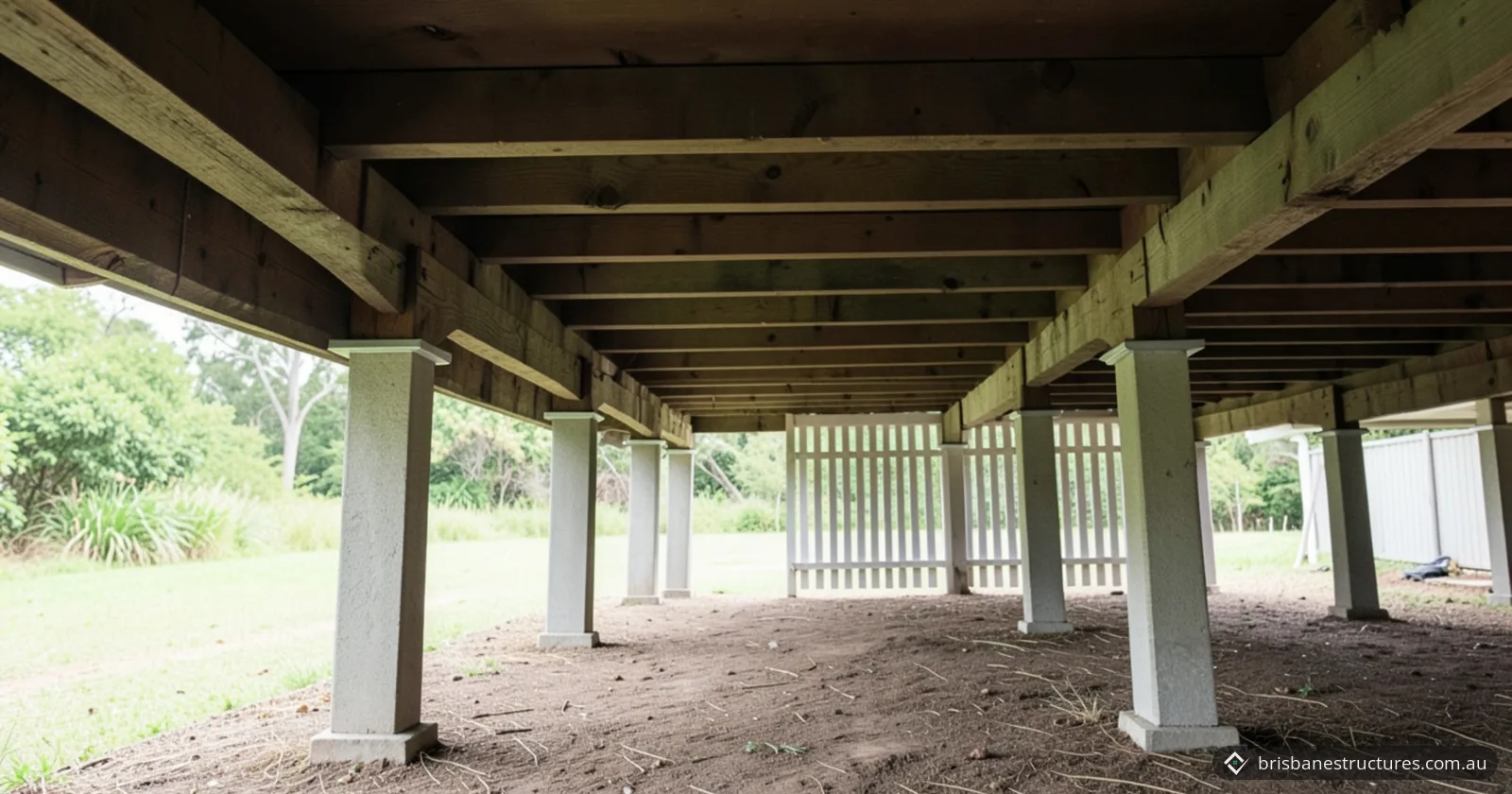
Raised houses deserve a close look underneath. The QBCC calls the area beneath a suspended floor one of a building's most susceptible areas to termite activity. That is where the bearers and joists sit on the stumps in a raised house. For stump problems, see our restumping guide and our comparison of concrete, steel and timber stumps.
What should you do first if you find termites?
If you find termites, leave them undisturbed and call a licensed termite management contractor. The Queensland Government advises not disturbing any nests, mud tunnels, paths or trails if you think your property has termites.
In Queensland, the QBCC says a contractor must hold a Termite Management licence (Chemical or Physical) to give advice or reports on termite management systems or infestations. A chemical treatment also needs a Government-issued Pest Control Operator's licence. If an inspection finds an infestation, the QBCC says re-treatment may be necessary to remove the problem. Plan any framing repairs with the engineer once the contractor has dealt with the termite activity.
Who checks termite damage: pest inspector or structural engineer?
A licensed timber pest inspector finds termites and reports the damage they can see, while a structural engineer works out what the damage means for the structure and how to repair it. The two roles answer different questions:
| Timber pest inspection | Pre-purchase building inspection | Structural engineer's assessment | |
|---|---|---|---|
| Standard or law | AS 4349.3 | AS 4349.1 | Professional Engineers Act (Queensland) |
| Who carries it out | A contractor appropriately licensed by the QBCC | A contractor appropriately licensed by the QBCC | A Registered Professional Engineer of Queensland (RPEQ) |
| What it reports on | Evidence of present or past timber pest activity and damage, the building's susceptibility, conditions that raise the risk, and recommendations for further investigation or action | The general condition of the property and any major defects | The structural members affected, and the repair the structure needs |
The QBCC describes the AS 4349.3 inspection as visual and non-invasive. It includes non-marking sounding of elements and assessment of moisture content. It also says any timber pest inspection is limited by the inspector's competencies and by impediments at the time, such as areas that can't be inspected or deliberately concealed activity.
The Board of Professional Engineers of Queensland says anyone carrying out a professional engineering service in or for Queensland must be registered as an RPEQ.
How high is the termite risk in Brisbane and Queensland?
Termite risk is generally regarded as high in Queensland's coastal belt. The QBCC says termites are a problem in most parts of Australia, but are particularly active in hot, wet areas such as coastal Queensland.
The Queensland Department of Agriculture, Fisheries and Forestry's guide to subterranean termites adds:
- About 15 species of subterranean termite commonly damage timber in service across Australia, and 10 of them occur in Queensland.
- Coptotermes acinaciformis, one of the two most serious pest species, occurs throughout the state.
- The coastal belt and northern parts of the state are generally regarded as high hazard areas, but timber-damaging species occur throughout Queensland.
- Any structure containing wood is exposed to possible subterranean termite infestation, whether in a city centre, the suburbs or the country, unless protective measures are taken.
- A single colony's galleries can let it exploit food over as much as one hectare, with individual galleries up to 50 m long for most species.
- Mature colonies may number up to two million termites and exist for as long as 50 years.
Brisbane's older houses were built with termites in mind. Brisbane City Council's traditional housing design guide says traditional houses, generally built in 1946 or earlier, were typically raised on stumps, partly as a preventative measure against termites.
What are the rules for termite damage repairs in Queensland?
In Queensland, termite damage repairs to structural timber may need building approval, and the engineering must come from an RPEQ.
- Building approval. Schedule 1 of the Building Regulation 2021 lists accepted development (self assessable). Section 7 covers repairs that don't affect a structural component. Section 8 covers repairs to a minor structural component, such as replacing a verandah post or a bracing member, within limits: for example, work affecting no more than 20% of the building's structural components of the same type. Repairs to other structural components fall outside those items, so check with a building certifier whether approval is needed.
- Termite work. The QBCC says installing termite management systems in new building work needs a QBCC licence. AS 3660.1 covers new building work, and AS 3660.2 deals with existing buildings.
- New termite systems. Under the NCC's Queensland variation, a termite management system in a non-temporary house needs a design life of at least 50 years, unless it is easily and readily accessible for replenishment or replacement and can be replenished or replaced.
When to call a structural engineer
Call a structural engineer when termite damage reaches the parts of the house that carry load:
- a bearer, joist, stud, beam, lintel or roof member sounds hollow or has been eaten into;
- a timber pest report recommends further investigation of damaged framing;
- you're buying a house with past or present termite damage noted in the timber pest report;
- the repair affects a structural component and your building certifier needs engineering for the approval.
A structural inspection looks at timber decay and termite damage to structural members and classifies each defect by severity, with recommended remediation. For repair design and certification, see our structural reports.
Frequently asked questions
Does a termite barrier stop termites?
No. The QBCC says installing a termite barrier will not stop termite activity on the site. Barriers are meant to minimise the risk of termites reaching the building's primary elements through a concealed route, so regular inspections are still needed.
Do ant caps on stumps keep termites out?
The QBCC says ant caps don't prevent termites getting into the building. They block concealed entry and encourage termites into the open, where they can be noticed during inspections.
How often should a Brisbane house be inspected for termites?
The QBCC recommends an inspection at least every 12 months by a contractor holding the appropriate QBCC termite management licence, or more often in high-risk areas, such as near trees or bush. It also says owners should do their own checks between professional inspections.
Does a pre-purchase timber pest inspection cover drywood termites?
No. The QBCC notes that the definition of timber pests in AS 4349.3 excludes drywood termites and mould. It includes subterranean and dampwood termites, borers of seasoned timber and wood decay fungi.
Sources
- QBCC: Termite management systems, advisory notes for builders and homeowners (April 2024)
- QBCC: Protect against termites
- Queensland Government: Termites (information for public housing tenants)
- Queensland Department of Agriculture, Fisheries and Forestry: Subterranean termites in Queensland (October 2013)
- Queensland legislation: Building Regulation 2021, Schedule 1 Accepted development
- ABCB: NCC 2022 Housing Provisions, Part 3.4 Termite risk management, Queensland variations
- Brisbane City Council: Traditional housing alterations and extensions design guide
- Board of Professional Engineers of Queensland