Structural inspection and report · Chelmer QLD
In short: A client in Chelmer asked whether a jammed French door meant the load-bearing wall beside it, or its brick piers, had moved with the soil. Our visual inspection traced it to misaligned hinges. The wall and piers were sound, no soil-related movement was seen at the time, and the door needed hinge work, not structural repair at this time.
- Service
- Structural inspection and report
- Location
- Chelmer QLD
- Completed
- September 2026
- Client's concern
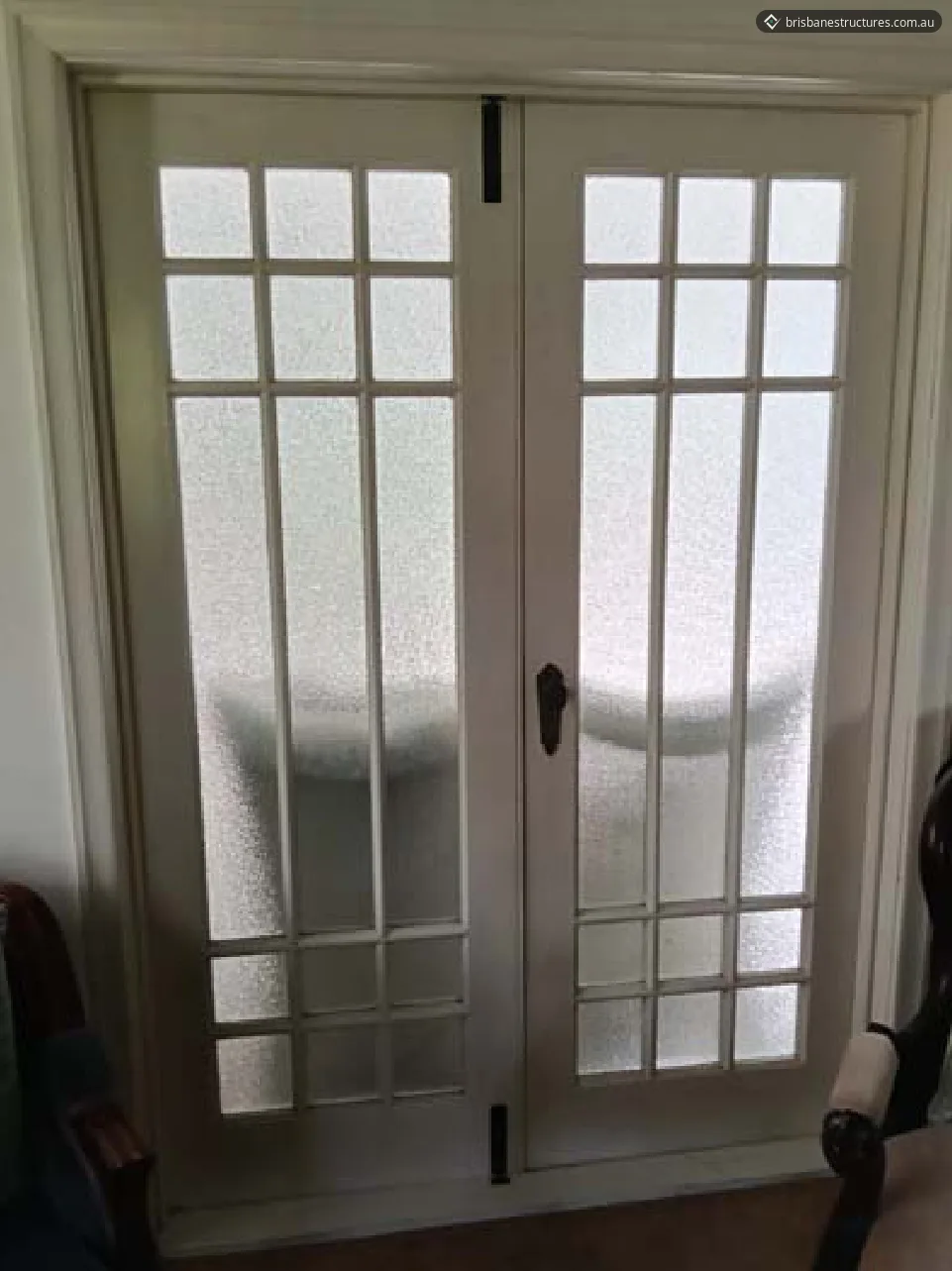
- Whether a jammed French door meant the load-bearing wall beside it, or its supporting brick piers, had moved with the soil
- Inspected
- The load-bearing wall next to the door, its supporting brick piers, the door and frame, and the visible ground nearby
- Inspection type
- Visual and non-destructive
- Documents available
- No original structural drawings, design calculations or as-built documents
The brief
The client's French door had jammed and could not be opened. Their main concern was whether the jamming was a sign of structural movement. In particular, they wanted to know whether the load-bearing wall next to the door, and the brick piers supporting it, had moved or deformed because of soil movement.
They asked for a structural inspection to find out. The home is in Chelmer, one of the inner west and western Brisbane suburbs we cover.
Why it needed a structural engineer
A sticking door can be a sign that a house is moving. The QBCC's page on protecting against subsidence says most Queensland homes are built on clay soils, and that soil type, location and soil moisture can make building foundations move. When the QBCC inspects that kind of movement, the effects it records include cracking and sticking windows and doors.
A door can also jam for reasons that have nothing to do with the structure. Telling the two apart means checking what supports the door: the load-bearing wall beside it, the piers under that wall and the ground they stand on. That is a structural assessment. Here it was carried out by a practising Registered Professional Engineer of Queensland (RPEQ).
What we inspected
The inspection was a visual, non-destructive assessment of:
- the load-bearing wall next to the door, for visible distress, cracking or deformation;
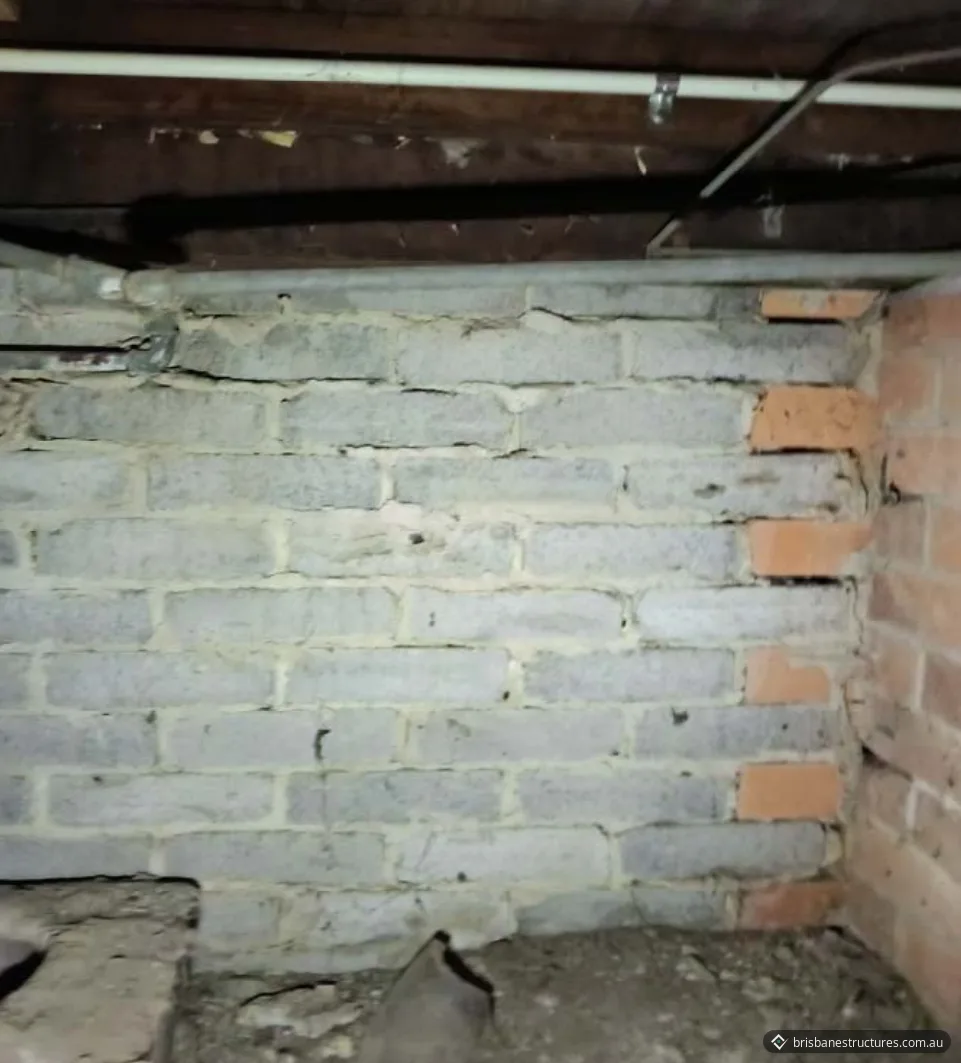
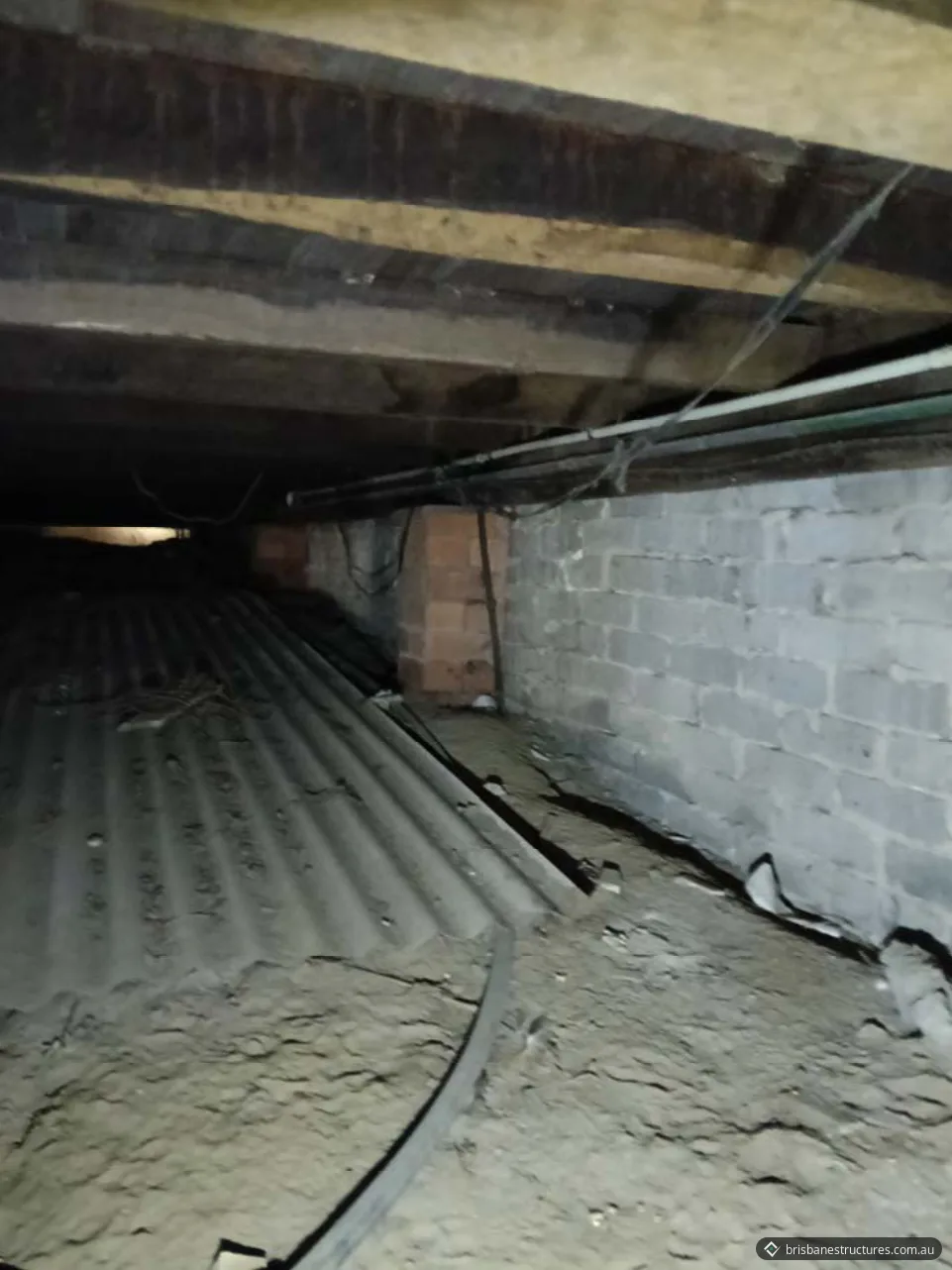
- the brick piers beneath and associated with that wall, for their condition and any evidence of movement or settlement;
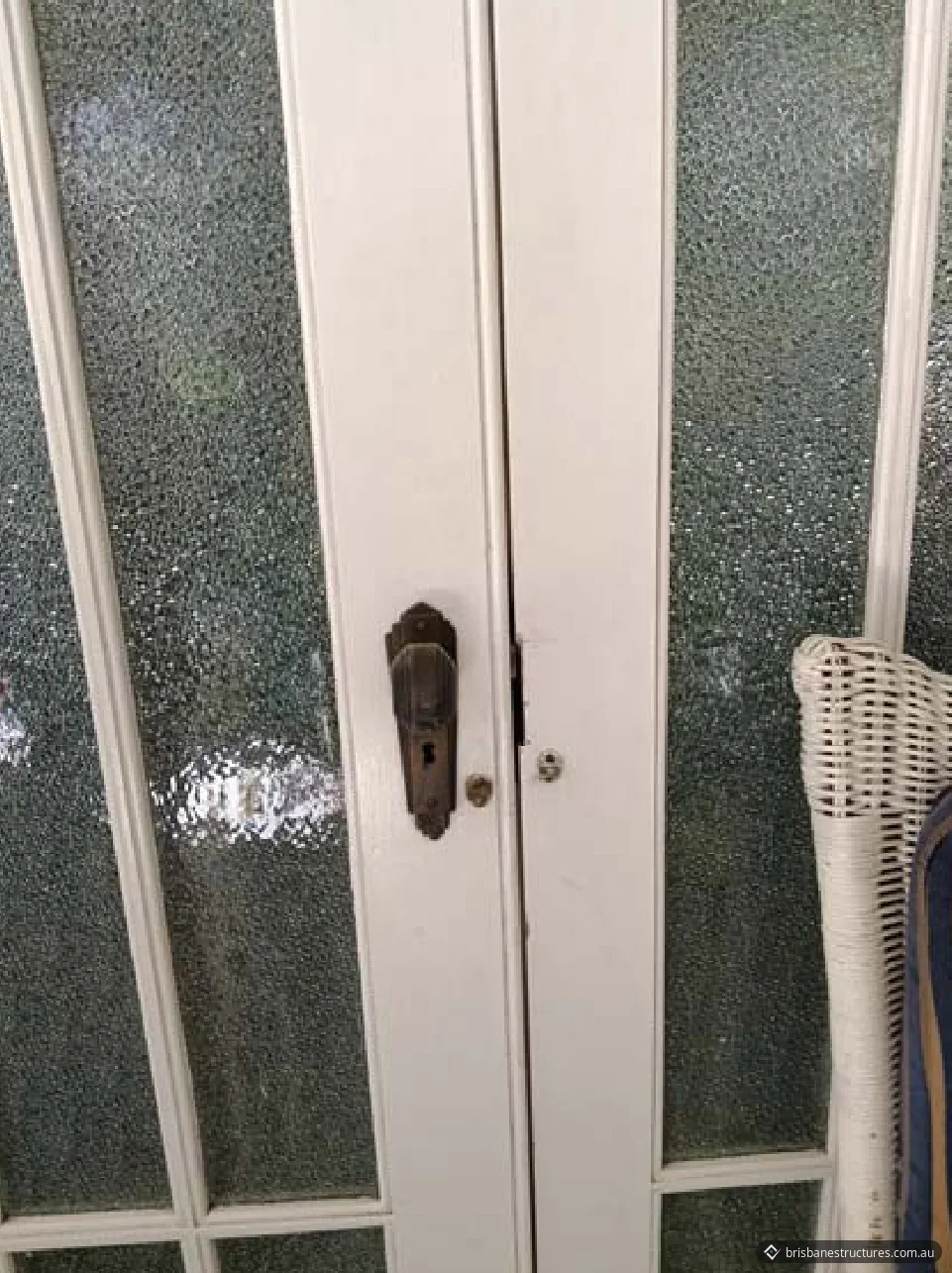
- the French door and its frame, to work out whether the jamming came from structural movement or from a non-structural cause such as hinge misalignment;
- the visible ground and site conditions around them, for obvious signs of soil movement such as surface cracking, ponding, or heave or settlement related to vegetation.
What we found
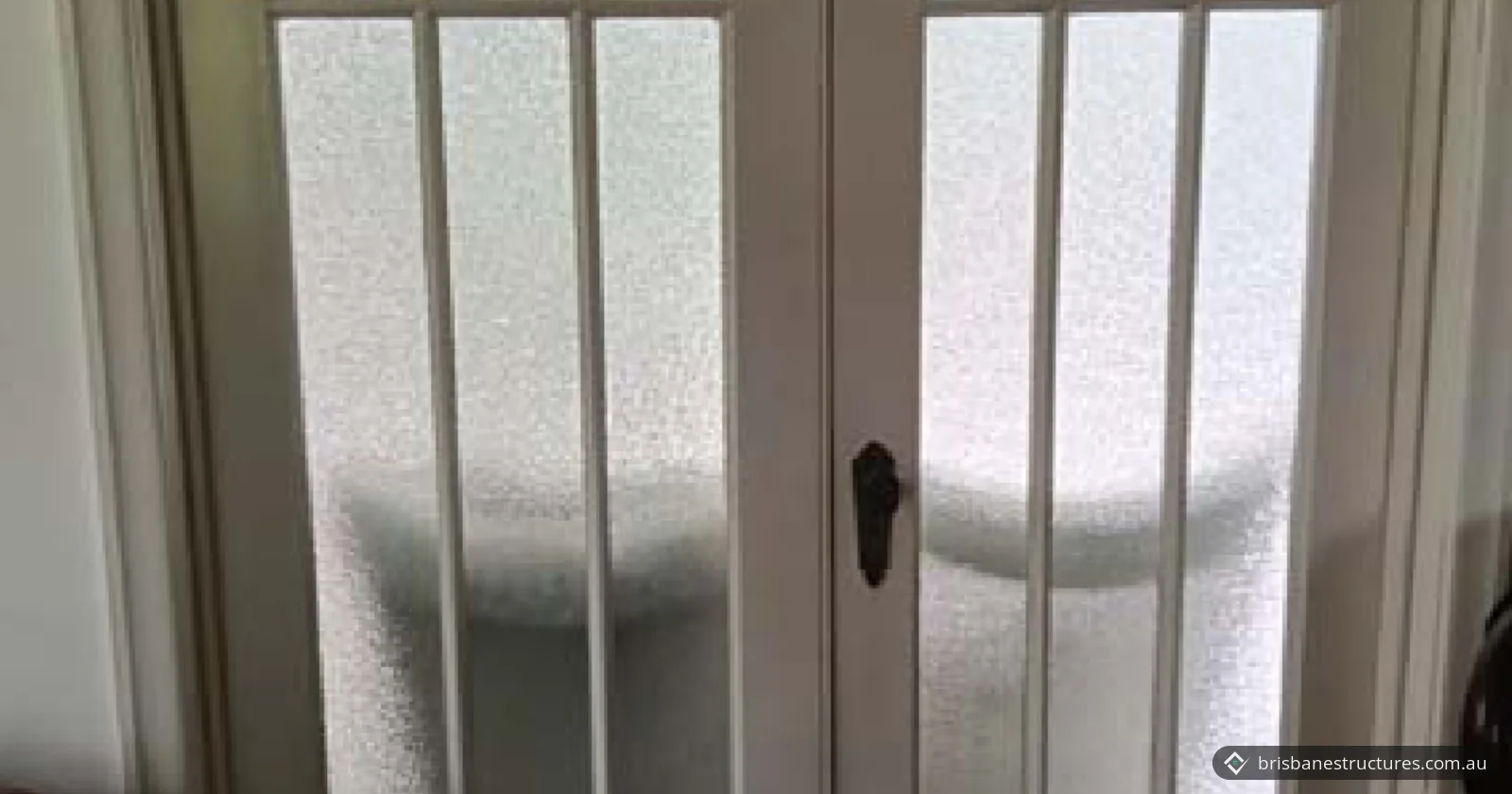
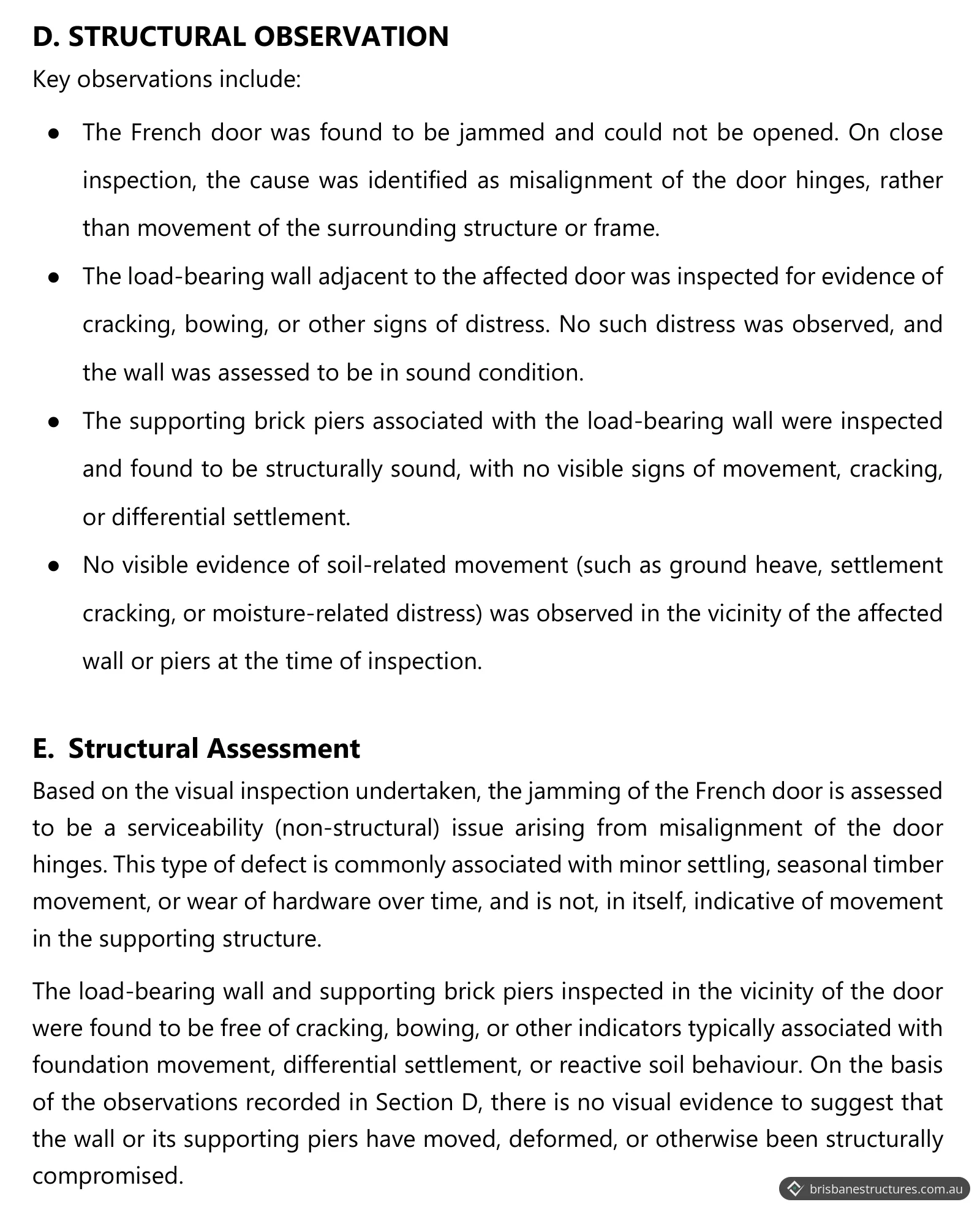
- The door. The French door was jammed and could not be opened. On close inspection, the cause was misalignment of the door hinges, rather than movement of the surrounding structure or frame.
- The load-bearing wall. The wall was checked for cracking, bowing and other signs of distress. None was seen, and the wall was assessed to be in sound condition.
- The brick piers. The supporting piers were structurally sound, with no visible signs of movement, cracking or differential settlement.
- The ground. No visible evidence of soil-related movement, such as ground heave, settlement cracking or moisture-related distress, was seen near the wall or piers at the time of inspection.
The report assessed the jamming as a serviceability (non-structural) issue caused by the misaligned hinges. It notes that this kind of defect is commonly associated with minor settling, seasonal timber movement or wear of hardware over time, and is not, in itself, a sign of movement in the supporting structure. Based on what was observed, there was no visual evidence that the wall or its piers had moved, deformed or otherwise been structurally compromised.
The result
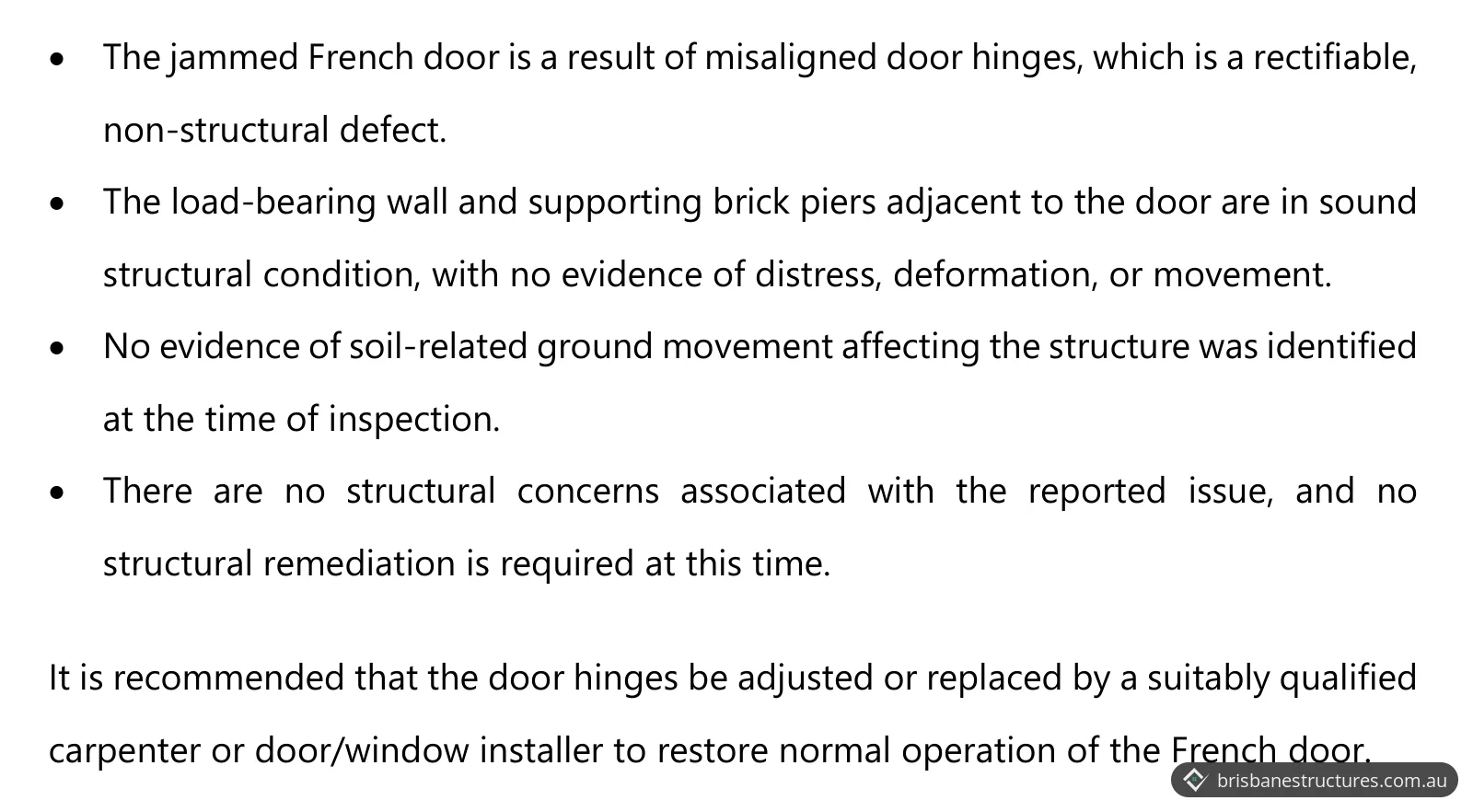
The report concluded that there are no structural concerns associated with the reported issue, and that no structural remediation is required at this time. It recommended that a suitably qualified carpenter or door/window installer adjust or replace the hinges to restore normal operation of the door. So the client's next step was a hinge repair, not structural work.
What a visual inspection does not cover
The inspection was limited to a visual, non-destructive look at the wall, the piers, the door and the visible ground near them. No original structural drawings, design calculations or as-built documents were available, so the report is based on the client's information, what was seen on site and engineering judgement. The original structural design capacities were not verified beyond the scope of that visual inspection, and the findings describe the conditions at the time of inspection.
Sticking door or new cracks in your Brisbane home?
Our structural inspections cover existing homes with cracking, movement, sticking doors or sloping floors, and look at the structure from the substructure up. Send us photos of the door, crack or wall that worries you, tell us when you first noticed it, and include any plans you have. We'll reply with a quote. If you need a report for an insurance claim or a QBCC complaint, our structural reports page sets out the report types. You can contact us for a quote or call 07 3155 5013.
Photos and drawings
From the report
Sample pages from what the client received (personal details removed).
Frequently asked questions
Can a sticking door be a sign of foundation movement?
It can be. The QBCC says soil type, location and soil moisture can make building foundations move, and its inspectors record the effects of that movement, including cracking and sticking windows and doors. The QBCC lists doors and windows that stick slightly as acceptable under the Standard, and doors or windows that stick and distort as not acceptable. A door can also stick for non-structural reasons. On this job, the cause was misaligned door hinges.
Why do Queensland homes move with wet and dry seasons?
The QBCC says most Queensland homes are built on reactive clay soils, which swell when wet and shrink when dry. Footings designed to AS 2870 Residential slabs and footings are intended to cope with these seasonal movements under normal conditions. Trees, poor surface drainage and leaking plumbing can cause extra movement and damage if the design didn't allow for them. Sandy and rocky sites are usually not prone to this movement.
What should I do if I notice cracking or sticking doors at home?
The QBCC's homeowner guide says to check the site's drainage, gardens, trees and any leaking pipes when cracking appears, and to seek professional advice from your builder or an engineer when you notice movement. If building work caused the problem, the QBCC says the builder is responsible for fixing it within 6 years and 6 months of starting that work.